
Last updated November 14, 2026
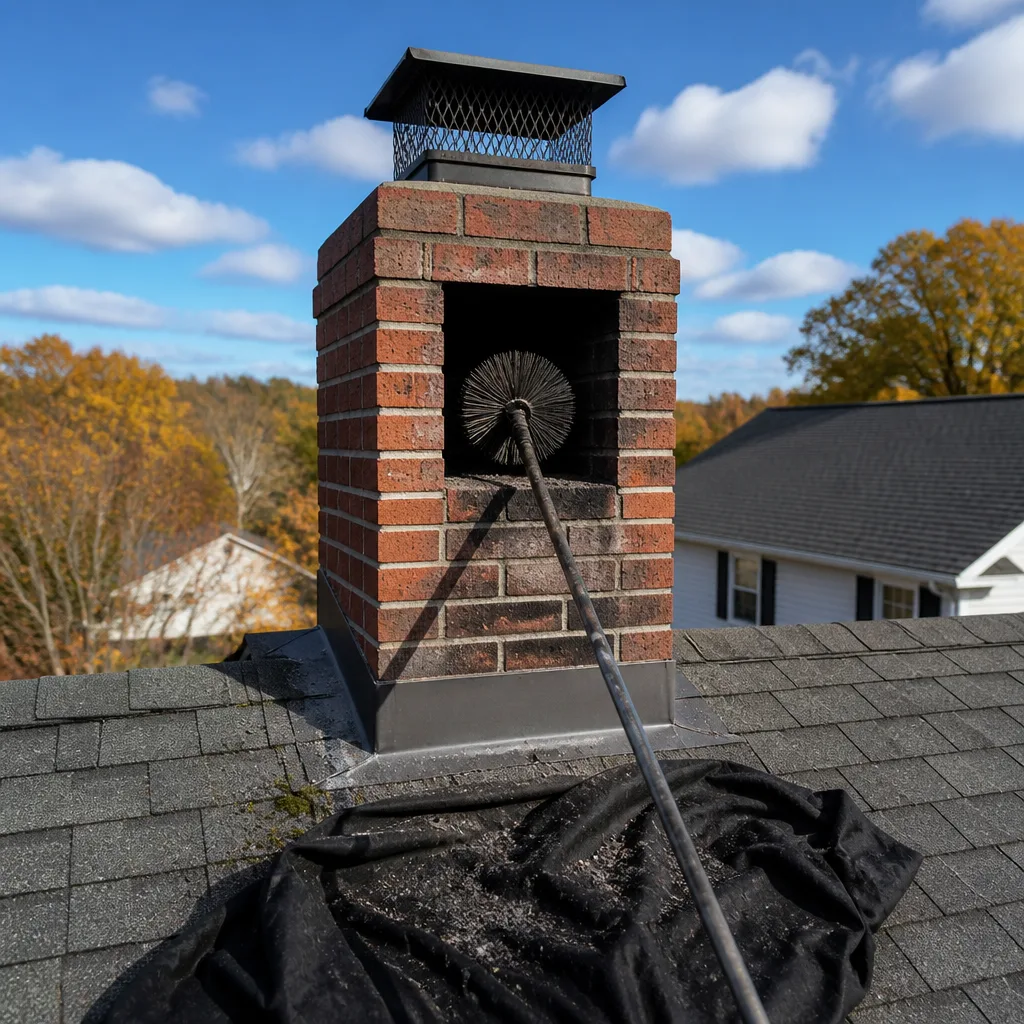 Sweep & inspection
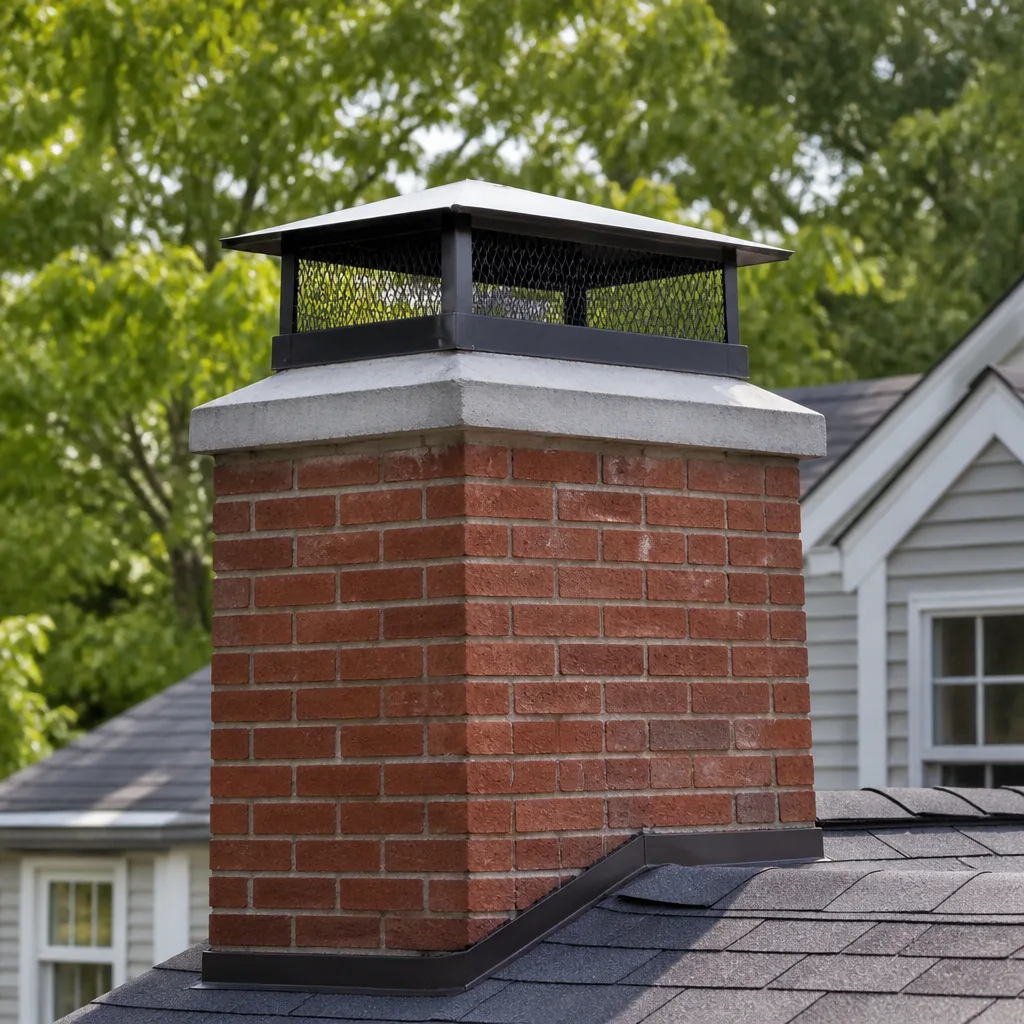 Caps & crowns
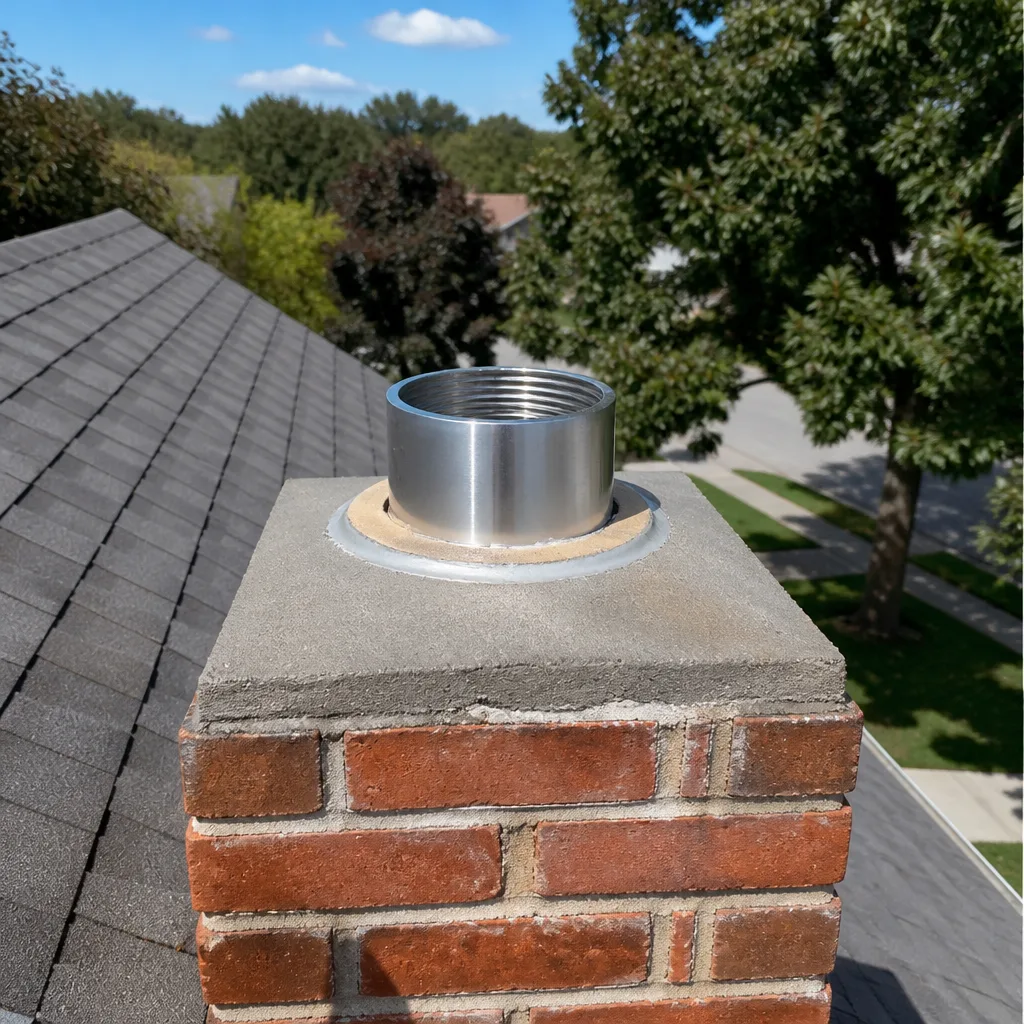 Flue relining
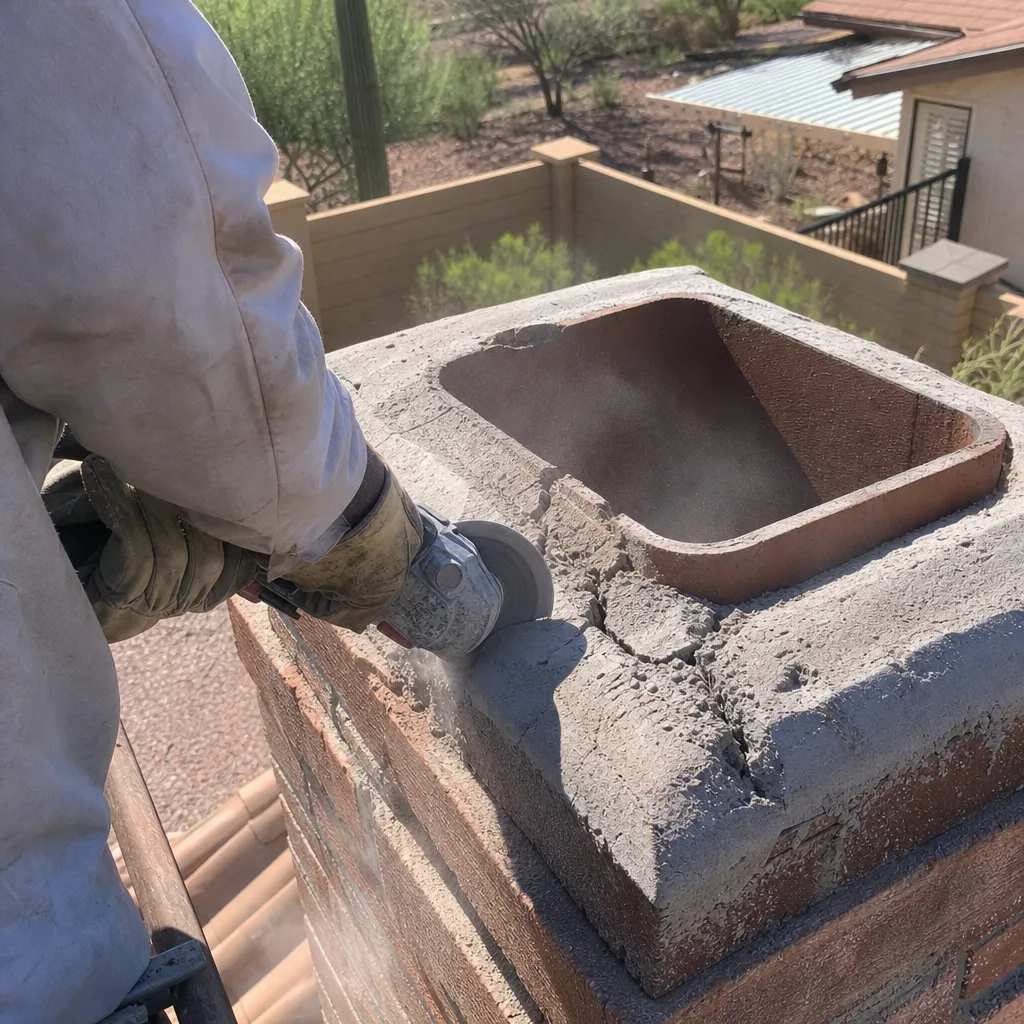
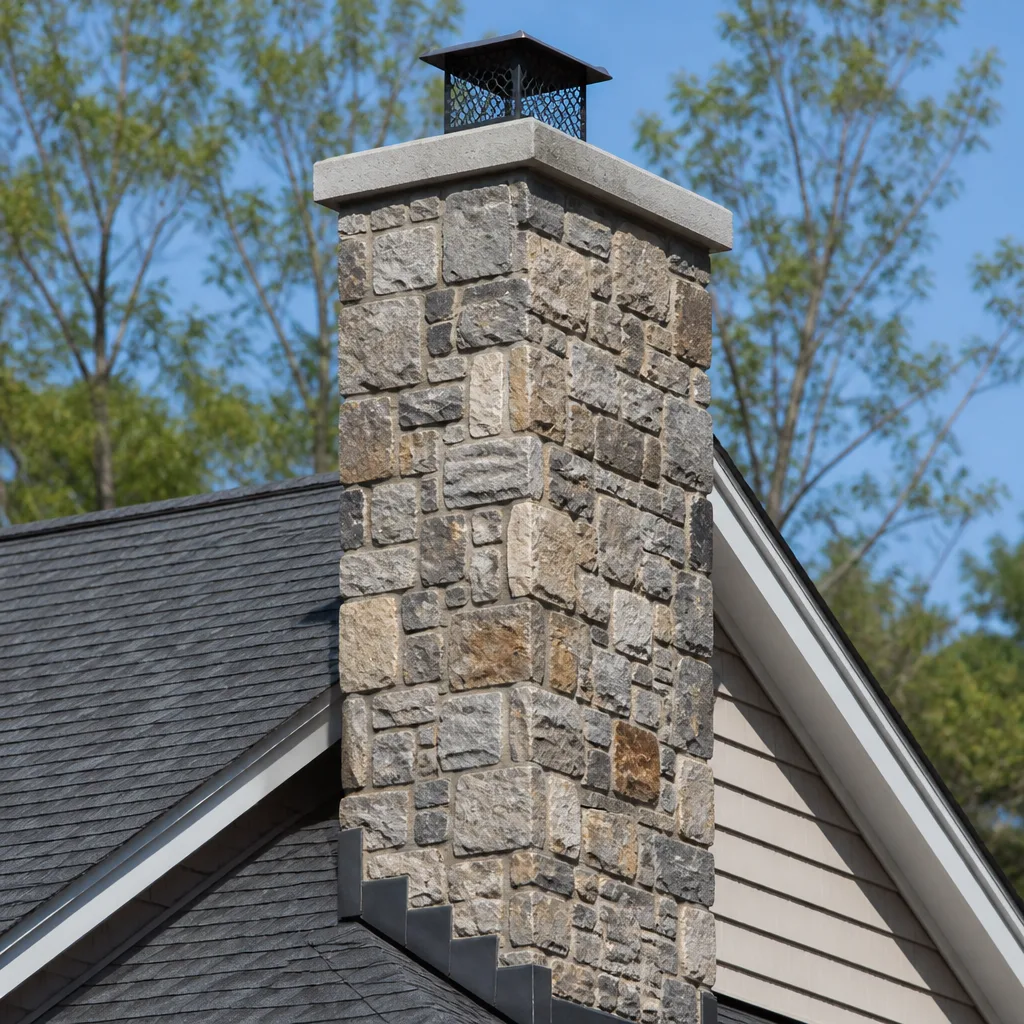 Masonry repair
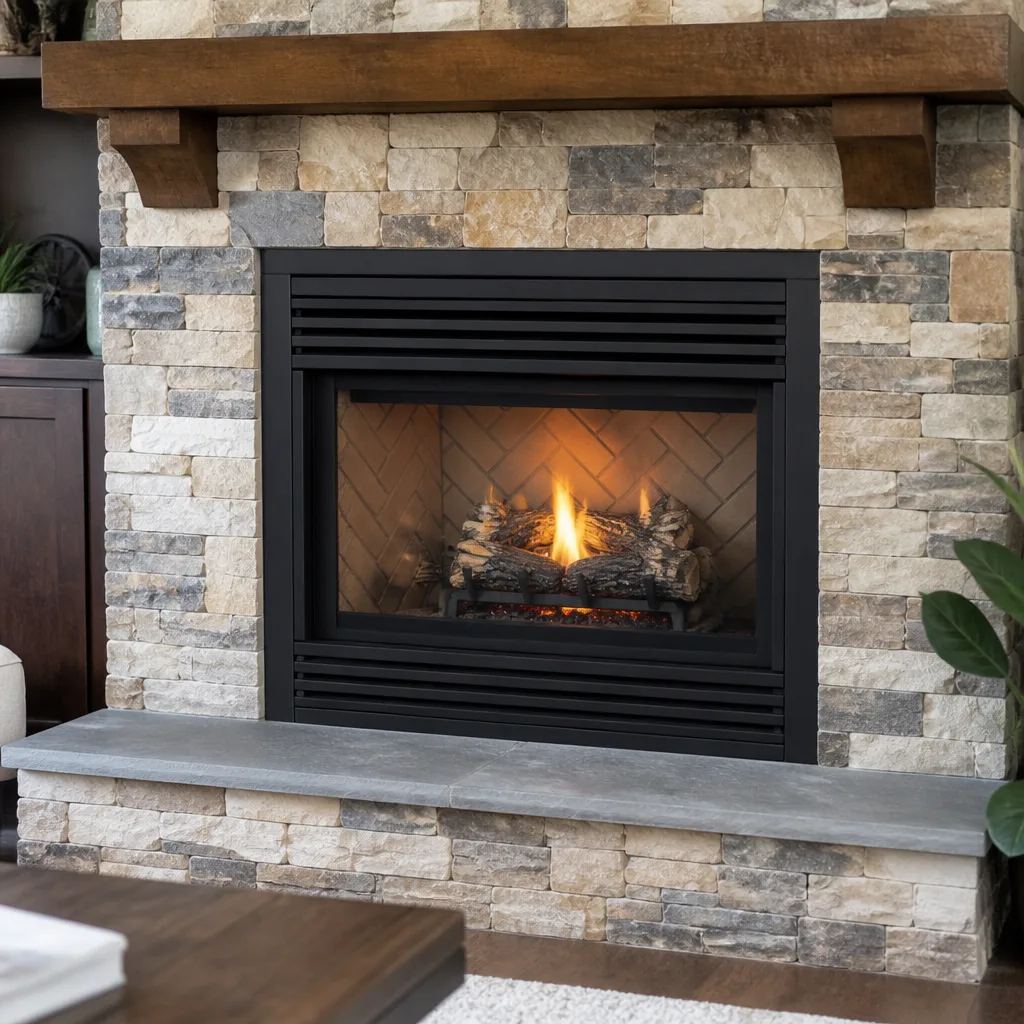 Gas fireplace service
Level 1 sweep and inspection to the NFPA 211 annual standard - flue, crown, cap, and flashing checked and photographed
Chimney sweep logs do not sweep chimneys. They loosen some creosote - which then falls where a brush and vacuum still have to collect it.
DIY vs Professional Chimney Cleaning: The Tucson Homeowner’s Decision Guide
You can buy a chimney brush at a hardware store and push it up your flue. That part is true, and plenty of homeowners do it. But here’s the counterintuitive part: in Tucson, the brush was never the hard part. The hard part is knowing what you’re looking at when you shine a light up a flue and see black buildup. Is it Stage 1 creosote you can brush off, Stage 2 creosote that’s bonded to the tile, or a hairline crack in the liner that looks exactly like soot from six inches away? This guide walks through what a competent do-it-yourselfer can actually accomplish, what gets missed without a camera, and how to decide honestly whether to clean it yourself or hire a specialist.
Styles & brands we work with
- Sweep & inspection
- Caps & crowns
- Flue relining
- Masonry repair
- Gas fireplace service
Quick Answer
A competent homeowner can brush a low-use, single-story, visually accessible fireplace in Tucson, but professional cleaning is worth it because the value isn’t the brushing, it’s the inspection that comes with it. Without a camera, you can’t verify liner condition, smoke chamber integrity, or firebox cracks, and those determine whether your fireplace is safe to burn. If you have a professional baseline from the previous year and a straightforward setup, DIY is reasonable for one more season. If you’ve never had the chimney looked at, hire it out first.
Table of Contents
- What a Competent DIYer Can Actually Accomplish
- What Gets Missed Without a Camera
- The Dust Reality in Tucson Homes
- When DIY Actually Makes Sense
- Cost Comparison: DIY vs Professional
- How a Professional Sweep Works, Step by Step
- Repairs, Liners, and Why They Matter
- Common Mistakes to Avoid
- When to Call a Professional
- Frequently Asked Questions
What a Competent DIYer Can Actually Accomplish
Be honest about the scope. A brush, a rod set, a drop cloth, and a shop vac will handle a masonry fireplace with light buildup if the flue is straight, accessible, and the fireplace is on a single-story home. That’s a real task and a real homeowner can do it. What a brush won’t do is tell you anything about the condition of the flue on the way up.
Here’s what the DIY scope actually covers:
- Brushing the visible flue: With the right-diameter poly or wire brush, you can knock loose Stage 1 creosote off masonry tile. Stage 1 is the flaky, dusty, easy-to-brush layer. Stage 2 (the glazed, tar-like layer) will not come off with a brush at all, and if that’s what’s inside, no amount of scrubbing helps.
- Cleaning the firebox floor: Ash, soot, and debris from the last season can be scooped and swept. This is the easy part.
- Removing the damper area debris: Nest material, fallen mortar, and loose insulation often collect at the damper. You can reach this from below on most fireplaces.
- Basic flashlight inspection: You can see the first several feet of flue from the firebox with a good flashlight, and you can see the firebox walls from the opening.
That list is worthwhile. But the physical constraints of Tucson’s most common fireplace configurations cut into the DIY list more than people expect. A lot of homes here have raised-hearth fireplaces (the kind popular in mid-century builds throughout the Catalina Foothills and Sam Hughes neighborhoods), which puts the firebox floor higher and the flue angle less forgiving. You’re working overhead for most of the job, and reaching the top of the chimney from inside the firebox on a two-story home is not a realistic ask.
Brush sizing matters, too. The brush has to be roughly the diameter of the flue tile. Too small and you’re just polishing the soot. Too large and it wedges. Nobody at the hardware store is going to ask you the flue tile dimension before selling you a brush.
What Gets Missed Without a Camera
The single biggest gap between a DIY cleaning and a professional one is the camera. A flashlight shows you two feet up. A chimney camera shows you the full flue run, the smoke chamber, the damper, and the top of the flue from below or the roof. That footage is the difference between “I cleaned it” and “I know what I cleaned.”
Three things a flashlight inspection routinely misses:
- Liner condition. Clay tile liners crack. The cracks can be hairline, and from six inches away with a hand-held flashlight, a hairline crack looks identical to a creosote stain. The camera sees the difference. A cracked flue tile allows hot gases and sparks into the framing, which is the failure point that matters most.
- Smoke chamber integrity. The smoke chamber is the sloped transition above the damper and below the flue. It’s not visible from the firebox with a flashlight, and it’s the area where rough mortar joints trap creosote and where masonry spalling shows up first. A chimney camera reaches it; a flashlight doesn’t.
- Firebox back-wall cracks. Hairline cracks in the firebox brick can look like normal thermal checking and often are. Some of them are not. Without a camera and without knowing the difference between expansion checking and structural cracks, a homeowner is guessing.
This is also where repair capability matters. If the camera finds a Stage 2 glazed flue or a spalled smoke chamber, the answer is not another brushing, it’s resurfacing or relining. That’s why we stock and install Tucson Chimney Sweep-grade materials from HeatShield, Gelco, Olympia Chimney, and Famco, and why we handle the repair in-house instead of handing you off to a second contractor. If your DIY cleanup turns up something you can’t identify, stop burning and get it looked at with a camera.
The Dust Reality in Tucson Homes
Ask anyone who has swept a chimney in a Tucson home with an open floor plan what happens next. The answer is a fine grey film on every horizontal surface in the house for a week. This isn’t a technique problem. It’s a physics problem, and it’s worse here than in humid climates.
Two reasons. First, most consumer shop vacs and household vacuums are not HEPA-rated for fine soot. They capture the big particles and blow the fine ones back into the room. Chimney soot particles are small enough to hang in the air for hours. Second, desert air is dry. In a humid climate, some of that soot settles fast because moisture causes particles to clump and fall. Here, with indoor winter humidity often under thirty percent, particles stay airborne and migrate through the house. If your return air handler is running while you’re cleaning, it will pull that soot into the filter, the ducts, and the coil.
Tucson homes with open floor plans make this worse. A traditional closed-plan house contains the dust to one room. A vaulted-ceiling living room with an open kitchen, dining area, and hallway lets the soot travel to every surface the air touches. And that grey film is not just cosmetic. Soot is acidic once it combines with moisture, and it can pit metal, stain drywall, and leave a smell in soft furnishings that takes weeks to clear.
Professional sweeps use high-CFM vacuums with HEPA filtration and negative-air setups that keep the soot in the firebox and flue while the brush is working. It’s the single biggest reason a professional sweep leaves a Tucson house cleaner than a DIY effort, even when the brushing itself was equally good.
The same dust problem shows up in a different system. If you’re already thinking about chimney dust, it’s worth knowing that dryer vent cleaning has its own lint-and-dust profile, and it’s the other household fire hazard that gets skipped. Two fire hazards, one call is a reasonable way to think about the annual check.
When DIY Actually Makes Sense
DIY makes sense in exactly one specific scenario: you have a visually accessible, single-story, low-use fireplace, and you already have a professional inspection baseline from the prior year. If those four conditions are true, brushing the flue this season is a reasonable homeowner task. You know the liner was fine last year, the setup is simple, and the buildup is likely light.
Here’s the checklist that has to be true before you pull the trigger:
- Prior-year professional inspection. Not just a sweep, an inspection with a camera and a written report. You need to know the liner was intact last year so you’re not missing a new crack.
- Single-story home. The chimney terminates close to the roofline, and you can access the flue from inside without a two-story rod run.
- Low use. A fireplace used a handful of times a season, or a gas insert that burns sealed, produces far less creosote than a wood stove running daily through Tucson’s mild winter evenings.
- Visually accessible firebox. You can see the back wall, the damper, and the firebox throat without mirrors or cameras.
- You’re comfortable on a ladder or you’re not going up one at all. If you’re cleaning from the firebox only, no roof access is needed. If you think you’ll be on the roof, stop. Roof work is where most chimney injuries happen, and it’s not a reasonable DIY task.
If any of those five is not true, the cleaning is the smaller part of the problem. A two-story home, a wood stove in daily winter use, a fireplace that hasn’t been looked at in three years, or a firebox with any crack you can see from the floor are all reasons to book a professional sweep and get the inspection with it. The chimney sweep side of the trade exists for exactly these cases, and the report you get back is the real asset.
Cost Comparison: DIY vs Professional
DIY is not free. That’s the part most cost comparisons skip. Between the brush, the rods, the drop cloth, and a HEPA-filtered vac that actually captures soot, the equipment bill is real, and it’s a one-time cost only if you never replace anything. A basic brush and rod set plus a decent drop cloth is the cheap version. Add a shop vac rated for fine particulate, a respirator, and goggles, and the number climbs.
Here’s the honest comparison:
- DIY equipment: Brush and rod set sized to your flue, drop cloth, respirator, goggles, and a shop vac or household vac you already own (or a HEPA-rated one you buy). The one-time outlay is real, and if you buy the wrong brush diameter you’ll buy again.
- DIY time: A few hours for a careful cleaning, longer if the firebox and damper need attention, and longer still if you’re trying not to spread soot through the house.
- DIY risk: Missed liner cracks, missed smoke chamber issues, soot redistribution, and the cost of a professional inspection later if something looks wrong during the season.
- Professional sweep: A brick-and-mortar price set per job by a written estimate, and typically includes the camera inspection and a written report. The estimate itself is free, and the price is set before the work starts.
The number that decides it for most homeowners is not the cleaning price, it’s the information. A DIY cleanup that misses a liner crack costs nothing to do and everything to ignore. A professional sweep that finds one and handles the repair (relining with DuraFlex or resurfacing with HeatShield) is the cheaper path by a wide margin. Both are Tucson Chimney Sweep jobs, both are in-scope for us, and neither is subcontracted.
If you have a friend with a camera, a shop vac, and a spare afternoon, DIY is a legitimate choice for one season. If you don’t, the professional sweep stacks up better than most homeowners expect once you price the equipment honestly. Call (855) 750-1719 for a free estimate, and we’ll tell you what your particular fireplace actually needs.
How a Professional Sweep Works, Step by Step
A professional sweep is a documented process, not a faster brushing. Here’s what a real one looks like, so you can compare it against what you’d do yourself.
- Setup and containment. Drop cloths, a HEPA vacuum at the firebox, and negative pressure in the flue so soot stays contained. This is the step that decides whether your house gets a soot film.
- Initial visual inspection. Firebox, damper, smoke chamber, and the first visible run of flue from below. Any obvious crack or spall gets flagged before brushing begins.
- Camera inspection. A chimney camera runs the full flue and captures the liner, joints, and smoke chamber. This is the piece a homeowner cannot replicate with a flashlight.
- Brushing. The flue is brushed top-down or bottom-up depending on the setup, with the right-diameter brush, and every surface gets addressed. Stage 1 buildup comes off. Stage 2 glazed creosote gets identified and quoted for resurfacing or relining, not brushed and called done.
- Firebox and damper cleaning. Ash, soot, and debris from the firebox and damper shelf are vacuumed out, not just swept.
- Post-brush camera check. The camera runs again after brushing to verify the flue is clean and to document condition for the record.
- Written report. Photos, findings, and recommendations, so you have a baseline for next year and a record if you ever sell the home.
That’s the process we run in Tucson because a camera inspection is only useful if it’s actually done, and it’s the reason we handle the repair work in-house. Liner replacement with DuraFlex flexible liner systems, ceramic flue resurfacing with HeatShield, and masonry work stay with one crew from inspection through completion. You don’t get handed off.
Repairs, Liners, and Why They Matter
The cleaning is not the whole job. In our experience, the majority of the safety value in a chimney visit comes from what the camera finds, not from the brush. A flue that’s cleaned but cracked is not a safe flue. A firebox that’s swept but has a spalled back wall is not a safe firebox. The liner matters as much as the cleaning.
Two repair paths come up most often:
- HeatShield ceramic resurfacing. When a masonry flue has spalling, minor cracking, or Stage 2 glazed creosote that brushing won’t remove, resurfacing is often the right call. It restores the flue surface without a full rebuild, and it’s the repair path that keeps a valuable chimney out of the “tear it down” category.
- DuraFlex flexible liner systems. When the flue is unlined, or the existing liner is too damaged to resurface, a flexible stainless liner is the answer. It’s the standard for gas inserts and wood stoves where flue sizing has to be corrected, and it’s a job that many local sweep-only operators refer out rather than handle.
We’ve chosen to stock the professional supply lines the trades actually use: HeatShield, Gelco, Olympia Chimney, and Famco. That’s not a marketing line, it’s a practical one. Sizing an insert flue correctly requires the right materials, and the big-box substitutes are the reason a reline job fails a few years in. The same logic applies to smaller parts: a proper damper, a correct cap, correct mortar. The supply chain is not the exciting part of the work, but it’s where the job either holds up or doesn’t.
Common Mistakes to Avoid
- Cleaning from the roof without fall protection or experience. Roof work is where chimney-related injuries happen. If your cleaning plan involves a ladder to the roofline, reconsider the whole plan and hire it out.
- Brushing Stage 2 creosote and calling it clean. Glazed, tar-like creosote does not come off with a brush. Brushing it and assuming the flue is now safe is the single most common DIY error. Stage 2 requires resurfacing or relining by a trained professional.
- Using a household vacuum on soot. Standard vacuums blow fine soot back into the room. It ends up on every surface in an open-floor-plan Tucson home. The dust is real and the cleanup takes longer than the sweep would have.
- Skipping the smoke chamber. The smoke chamber is above the damper and below the flue. It’s not visible from the firebox with a flashlight. It’s also where rough mortar joints trap creosote and where spalling starts. If you’re not inspecting it, you’re not finished.
- Assuming a gas insert means you can skip the sweep. A gas insert still has a flue that vents combustion gases, and an unlined or cracking flue venting gas is its own problem. Gas systems get inspected too, and the schedule is shorter not longer.
- Ignoring the dryer vent while you’re at it. The same dust-and-lint logic that makes a dirty chimney risky applies to the dryer vent. One call for both is the practical move, and both are fire hazards in a home where the winter air is dry and lint buildup dries out fast.
- Burning soft, resinous wood to “burn off” the creosote. It doesn’t work. It creates more creosote. Seasoned hardwood, correct air control, and a warm flue is the only real creosote-limiting strategy.
When to Call a Professional
Call a professional if any of the following is true: the chimney has not been inspected in more than a year; the home is two stories or taller; the fireplace is a wood stove or a gas insert; the firebox has any crack you can see from the floor; the flue has glazed, shiny buildup you can see with a flashlight; the fireplace smokes into the room, smells, or burns weakly; or you’re thinking about selling the home and need a documented baseline.
We also book a sweep when the fireplace is low-use but the last inspection was a few years back. Skipping a season of sweeping is usually fine. Skipping three is when the camera finds problems that were cheap two years ago and are expensive now. That’s not a scare line, it’s just how masonry behaves.
Tucson Chimney Sweep offers free estimates in Tucson. Call (855) 750-1719. We answer 24/7. Fast dispatch from 7am to 7pm, Sunday through Friday. We’re closed on Saturday, and we serve the metro including the Catalina Foothills, Sam Hughes, and the neighborhoods around the university.
Frequently Asked Questions
A professional chimney sweep in Tucson is priced per job by a written estimate, and the estimate is free. Price depends on the fireplace type, access, flue size, and whether a camera inspection is included. It’s set before the work begins so there’s no surprise on the invoice. Call (855) 750-1719 for an exact quote, and we’ll tell you what your setup needs before booking.
Yes, if you have a single-story, visually accessible, low-use fireplace and a professional inspection baseline from the prior year. You can brush Stage 1 creosote off the visible flue and clean the firebox. What you can’t do is verify liner condition or smoke chamber integrity without a camera. If you haven’t had a professional inspection in the past year, the DIY savings aren’t worth the information gap.
A chimney used regularly should be swept once a year, and a chimney used lightly should be inspected once a year even if it doesn’t need a full sweep. That’s the practical schedule in Tucson, where winter use is mild but still meaningful. Gas inserts and wood stoves get inspected on the same annual rhythm, not a longer one. Call (855) 750-1719 to get on the schedule before burning season.
Creosote accumulates, and at Stage 2 it glazes onto the flue and becomes the fuel for a chimney fire. Beyond creosote, cracks in the liner or smoke chamber can let heat and gases into the surrounding structure, and carbon monoxide can back up into the living space. Tucson fireplaces that go years without an inspection are the ones where the problem has had time to develop. Call (855) 750-1719 for a free estimate before your next burn.
Only if the camera shows the existing liner is unlined, cracked, spalled, or improperly sized. A clean, intact liner does not need replacing. That’s why we start with a camera inspection: the footage tells you and tells us whether a liner is actually needed, and it’s the reason we can quote relining with DuraFlex or resurfacing with HeatShield without subbing it out. If your liner is fine, we’ll tell you it’s fine. Call (855) 750-1719 to book an inspection.
Yes, because the value is the inspection, not the brushing. A low-use Tucson fireplace with a periodic professional visit catches the liner and smoke chamber problems that a brush alone never sees. It also gives you a documented baseline for next year, which is what makes DIY a reasonable option in the off years. Call (855) 750-1719 to set up the first visit.
The Bottom Line
DIY chimney cleaning is a real option, but only in a narrow scenario: single-story, low-use, visually accessible, and previously inspected by a professional. Outside that scenario, the brush is the easy part and the camera is the piece you can’t replicate at home. In Tucson’s low-usage market, that distinction matters because the cleaning is cheap and the missed liner crack is expensive. The cheapest path is not DIY or professional, it’s knowing which one your chimney actually needs.
We handle sweep, repair, and restoration in-house. No subcontracting, no referral runaround, no “we’ll have someone call you.” If the inspection finds something, we can fix it. If it doesn’t, we’ll tell you so.
Call (855) 750-1719 for a free estimate. We answer 24/7. Fast dispatch from 7am to 7pm, Sunday through Friday. We’re closed Saturday.
Written by the team at Tucson Chimney Sweep, serving Tucson since 2018.
See the difference
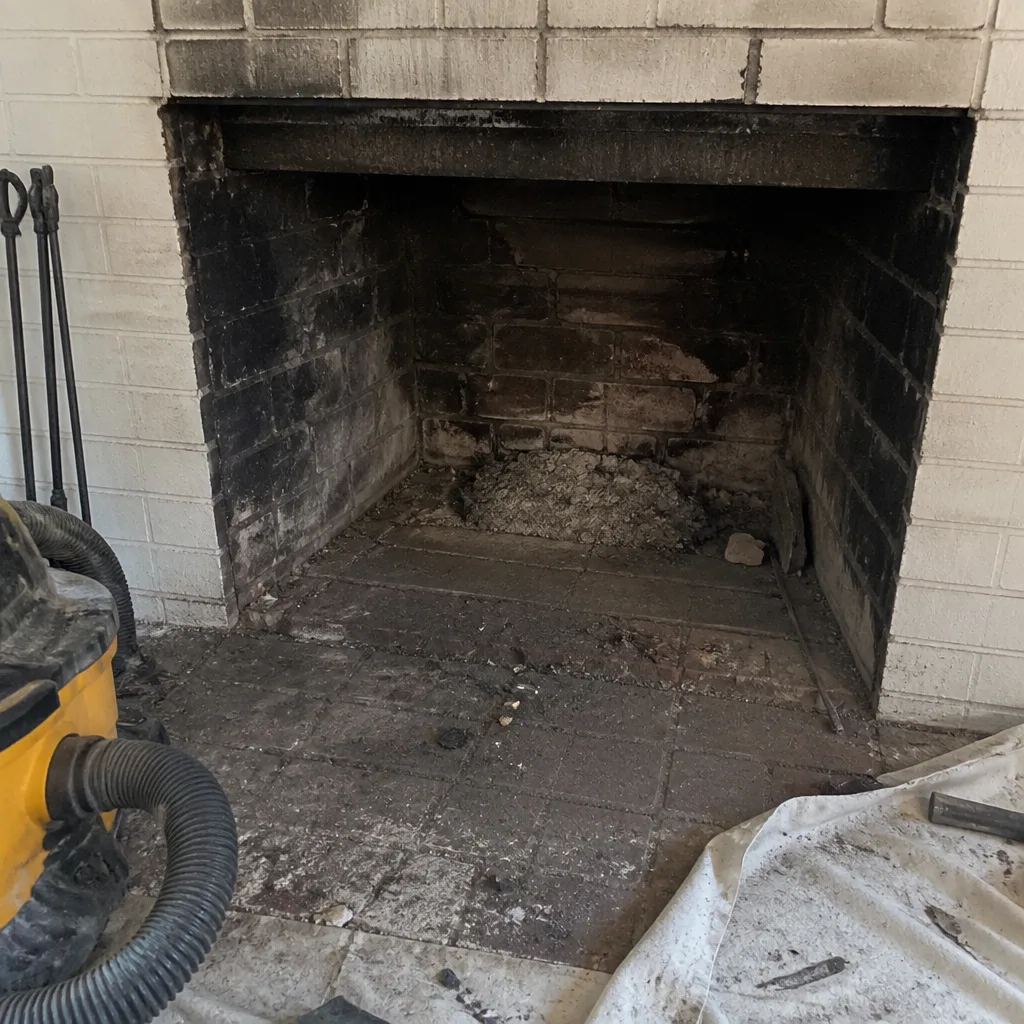 Before
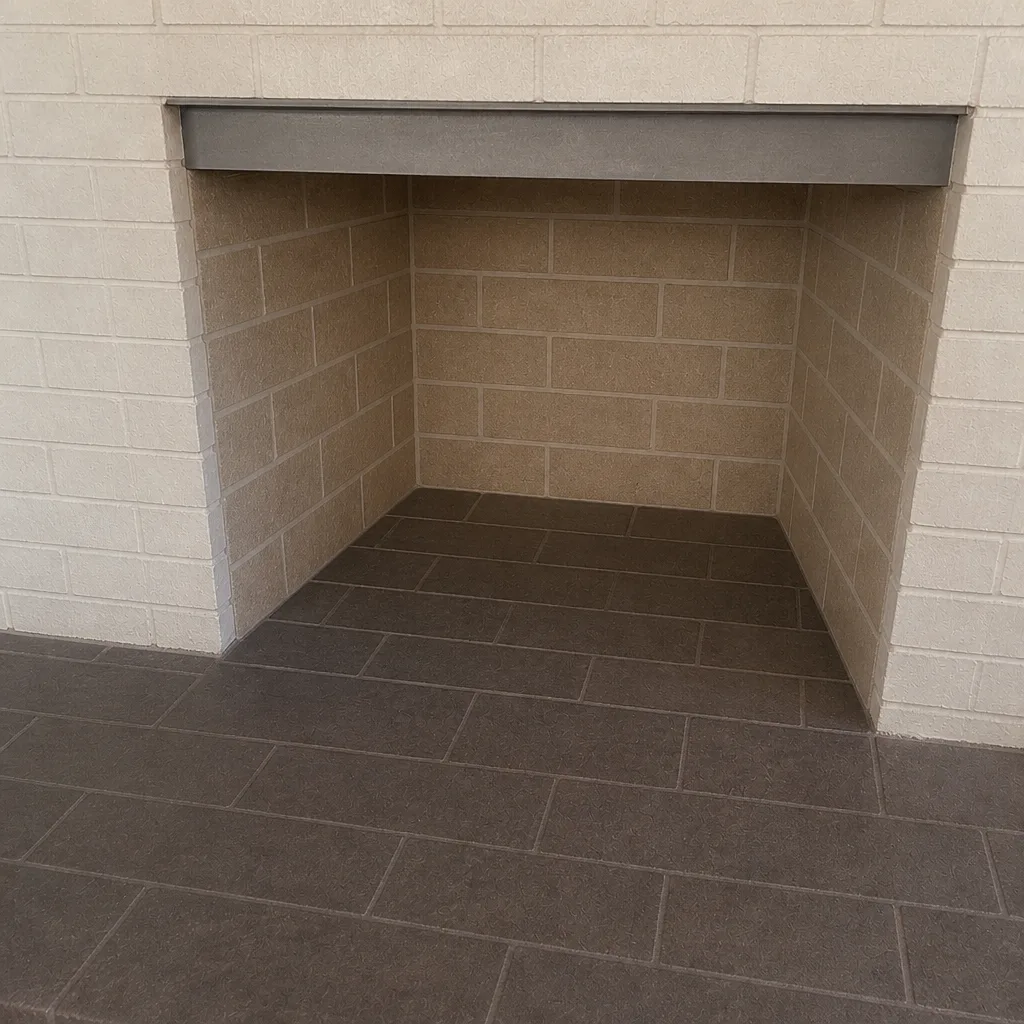 After
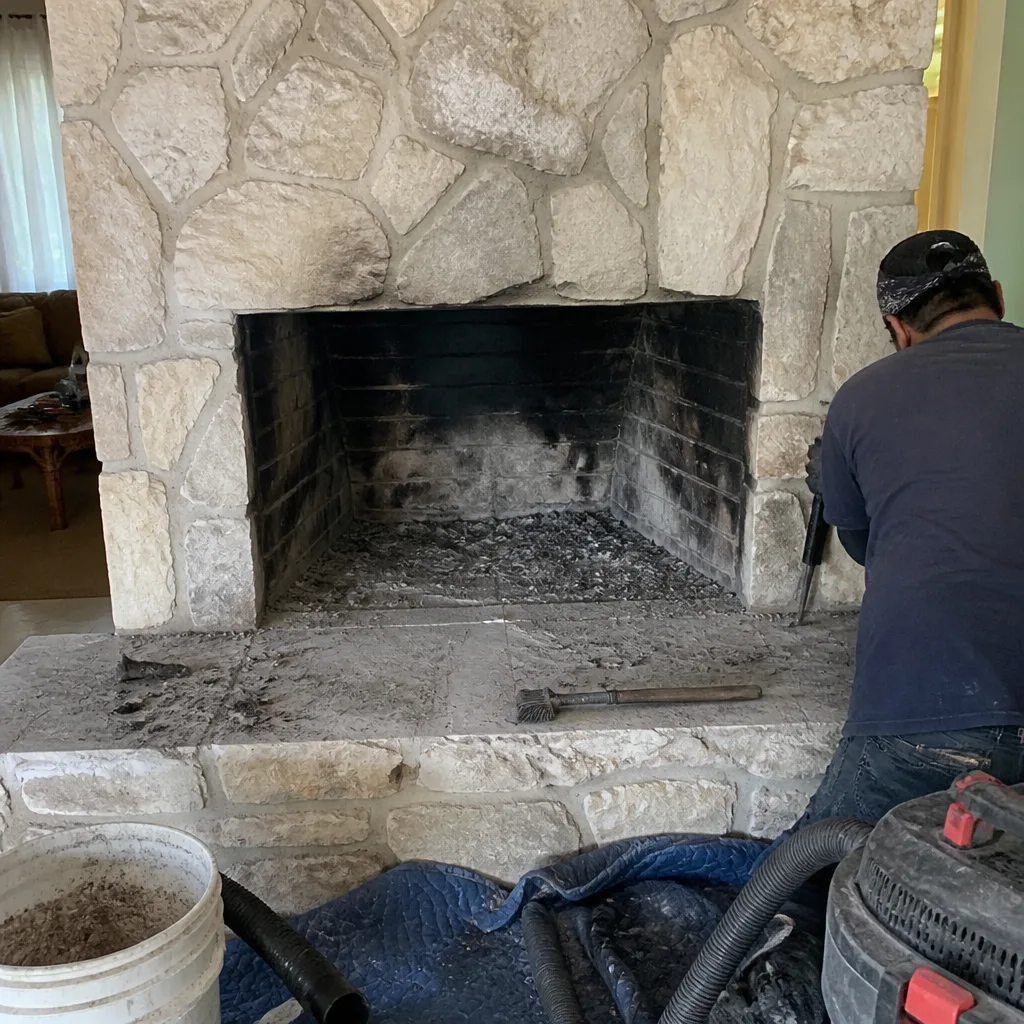 Before
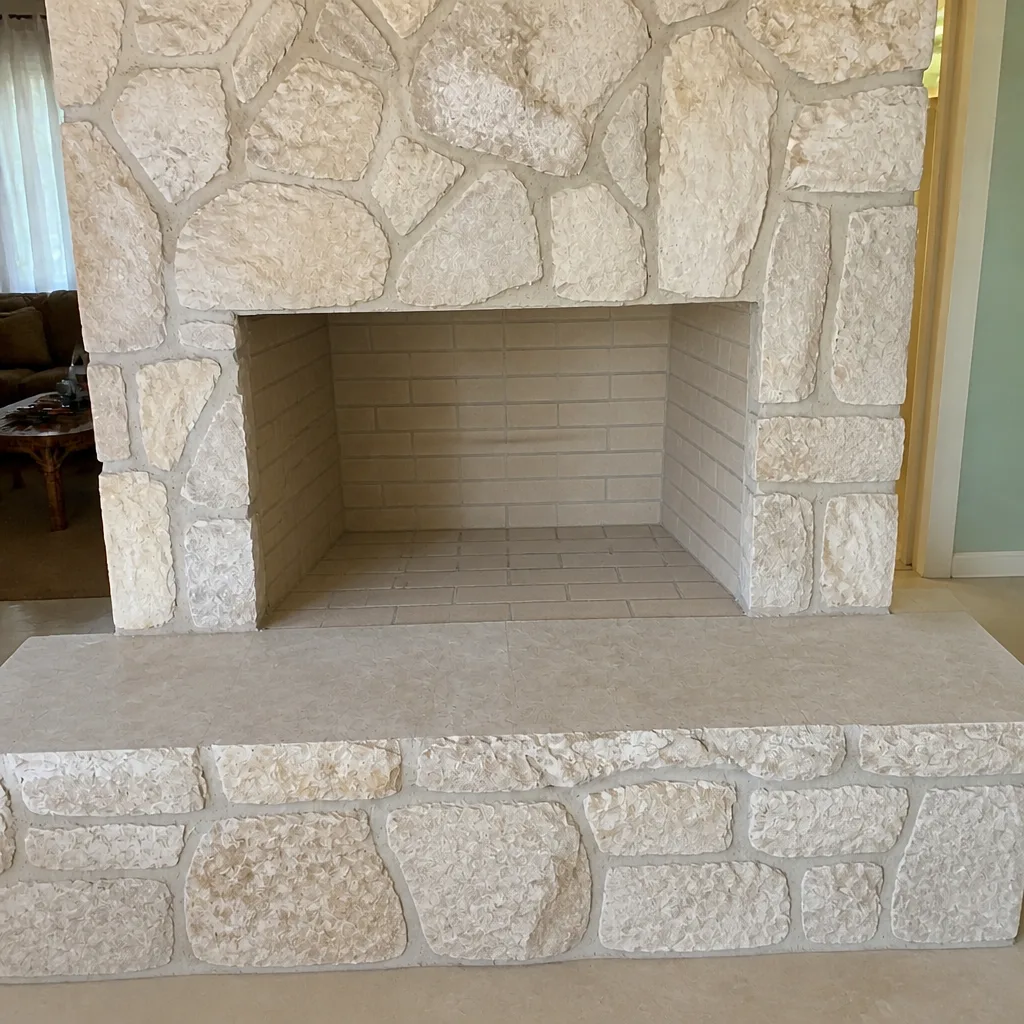 After
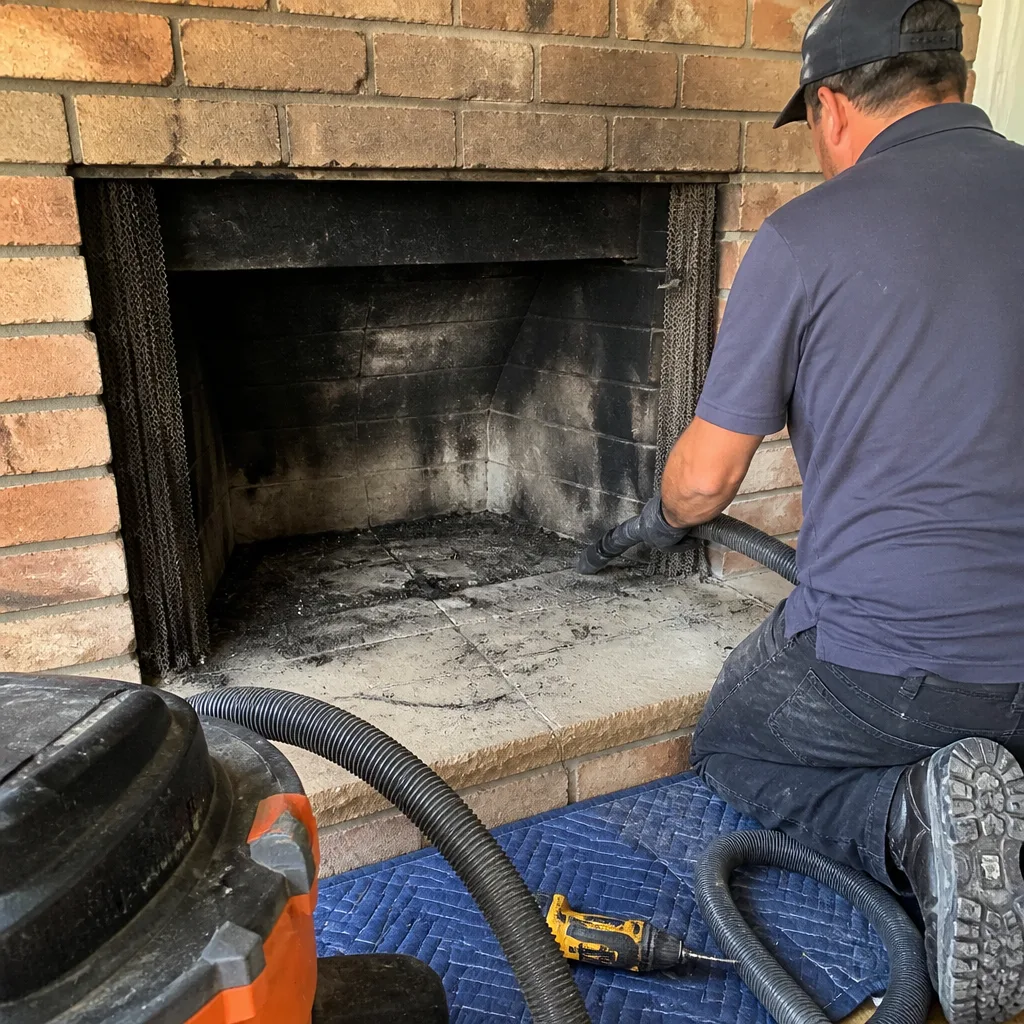 Before
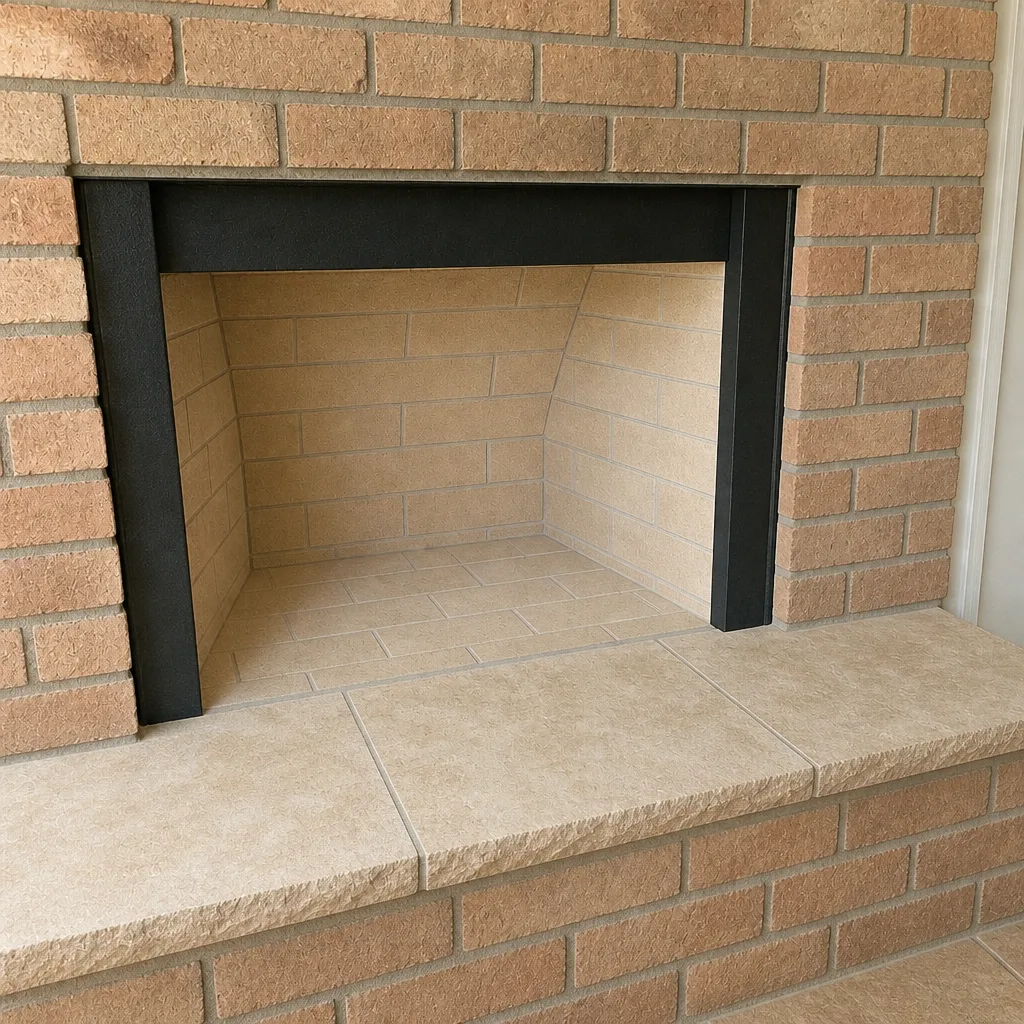 After