
Last updated November 14, 2026
 Sweep & inspection
 Caps & crowns
 Flue relining
 Masonry repair
 Gas fireplace service
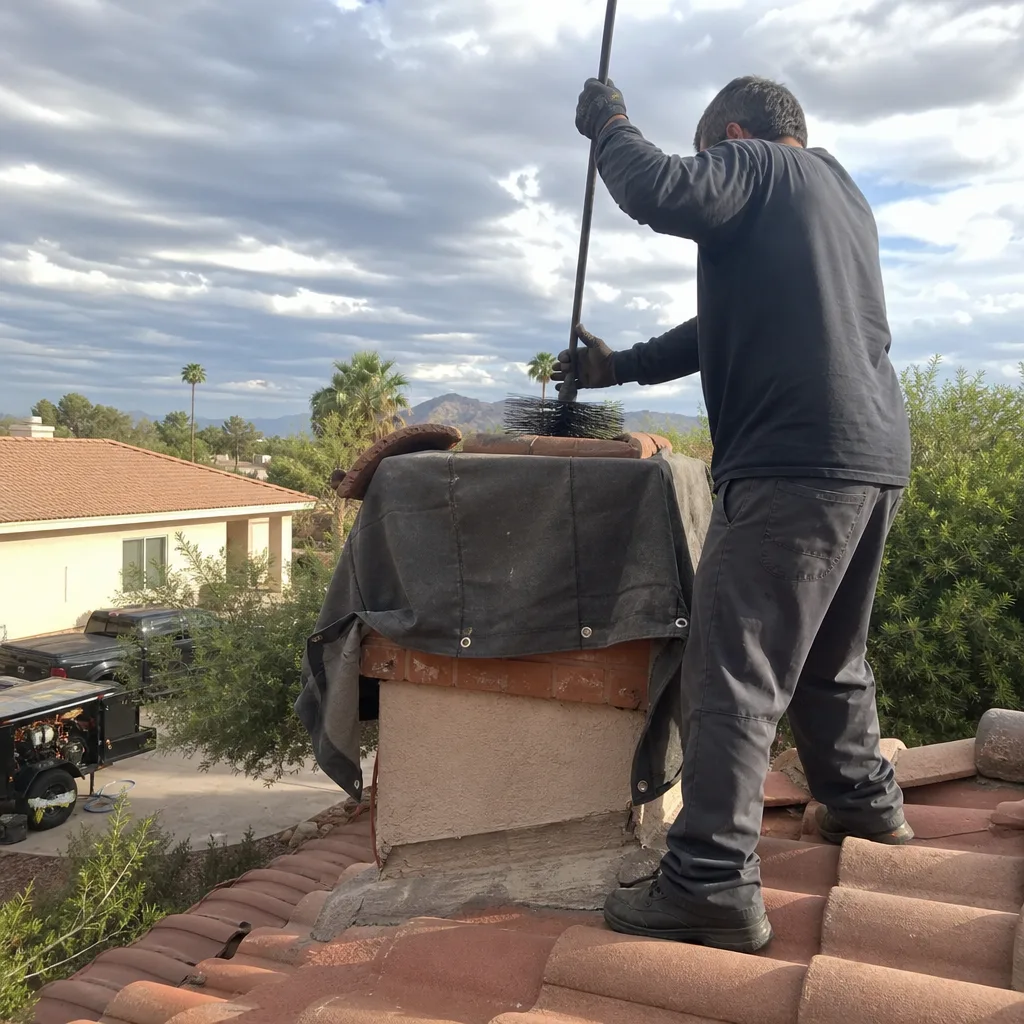
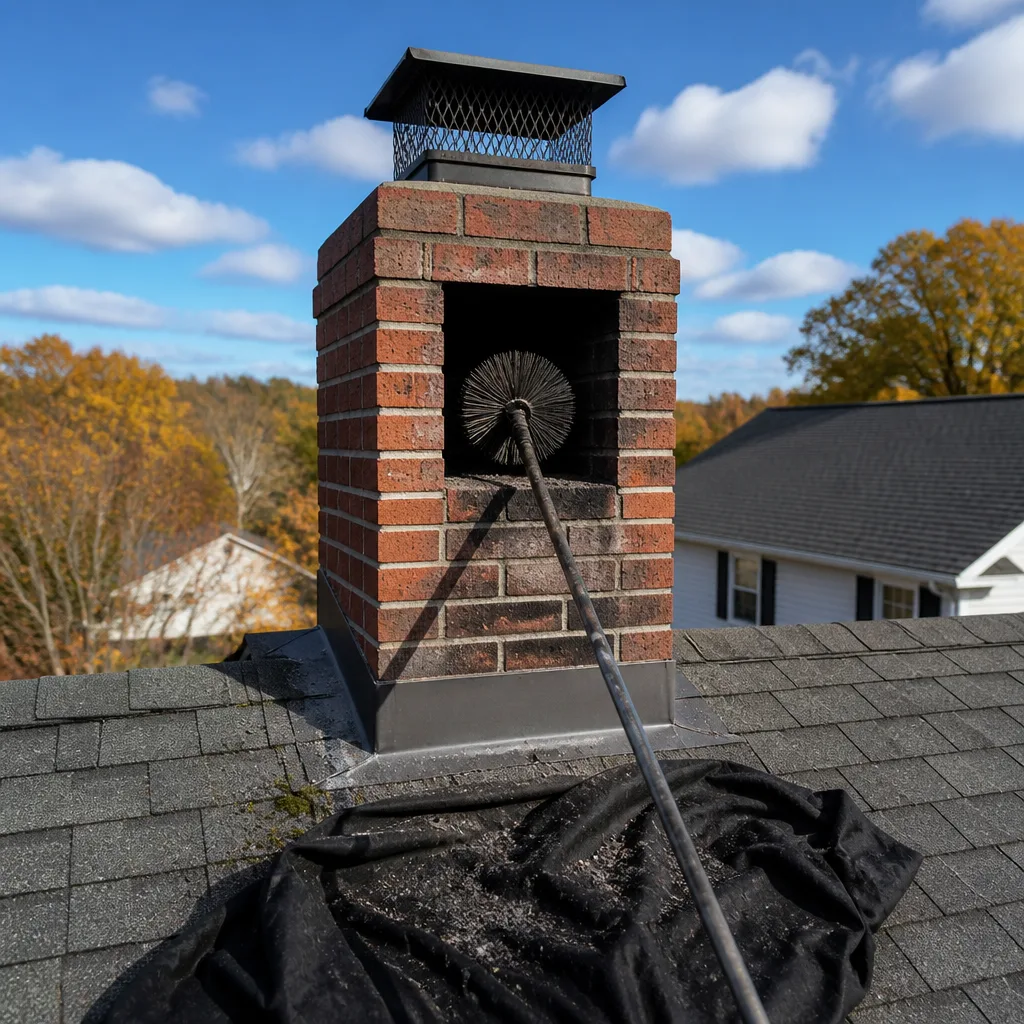
Level 1 sweep and inspection to the NFPA 211 annual standard - flue, crown, cap, and flashing checked and photographed
Chimney sweep logs do not sweep chimneys. They loosen some creosote - which then falls where a brush and vacuum still have to collect it.
Chimney Cleaning Warning Signs: A Tucson Homeowner’s Reference Guide
A white stain on brick and a black oily stain inside a firebox are both “chimney problems.” But one is usually a slow, cosmetic issue tied to water, and the other can point to an active fire hazard sitting in the flue right now. Knowing which is which is the whole point of watching for warning signs. Most guides hand you a list of symptoms and leave you to guess at urgency. This one connects each sign to the failure it actually represents, so you can describe what you’re seeing in plain language and decide whether it can wait or needs attention soon. We’re writing this from Tucson, where extreme heat, dry air, and seasonal swings in how a fireplace gets used shape the problems a chimney develops.
Quick Answer
The most reliable warning signs that a chimney needs cleaning or inspection are: a strong or lingering odor from the fireplace, visible black or glazed creosote inside the firebox, white or crumbling stains on exterior brick, smoke spilling back into the room, and scratching or dropping sounds that suggest wildlife. Any single sign is a reason to get the chimney looked at, but glazed creosote and smoke backup are the two that mean stop using the fireplace until a professional inspects it. When in doubt, a camera inspection settles it.
Styles & brands we work with
- Sweep & inspection
- Caps & crowns
- Flue relining
- Masonry repair
- Gas fireplace service
Table of Contents
- Why Chimney Warning Signs Need to Be Read, Not Just Noticed
- White Stains, Spalling, and Eroding Mortar: Reading Water Damage
- Identifying Creosote Stages You Can See From the Firebox
- The Smell Test: What Each Chimney Odor Actually Means
- Wildlife Evidence and What the Timing Tells You
- Cracks That Look Alarming vs. Cracks That Matter
- Smoke Backup, Draft Problems, and What They Signal
- When to Call a Professional
Why Chimney Warning Signs Need to Be Read, Not Just Noticed
A symptom by itself tells you very little. A dark deposit inside the firebox could be a normal season’s worth of soot, or it could be the early edge of glazed creosote that a chimney brush won’t remove. The same black mark means two different things depending on where it sits and how it feels. That’s why we walk homeowners through what they’re seeing rather than just handing them a checklist. The reading matters more than the noticing.
The chimney is a system, and problems show up in the part of the system where you can see them even when the cause lives somewhere you can’t. Water getting into the crown at the top of the chimney, for instance, often first shows as a stain on the exterior brick near the roofline or a musty smell drifting down into the room. Creosote buildup in the flue announces itself through smell, smoke behavior, and deposits near the damper. Wildlife that gets into the flue leaves traces at the firebox and on the damper shelf. If you learn to connect the visible sign to the hidden cause, you stop guessing and you stop panicking over things that are cosmetic.
Here’s the practical payoff. When a technician arrives, you can tell them “there’s a white powder stain on the outside brick about three feet down from the top” instead of “something’s wrong with the chimney.” That description shortens the inspection and reduces the odds you get sold work you don’t need. And it helps you judge urgency on your own. Some signs mean a sweep before the next fire. Some mean schedule it in the next few months. A few mean don’t light another fire until someone trained takes a look.
For homeowners in Tucson, this matters because the heating season is short and intense. You might use the fireplace a few dozen times between the first cool nights and the last, and each fire builds deposit. When you finally notice something is off, you’ve often gone a full season past the point where a cleaning would have been easy. The signs in this guide are what we look at when we inspect a home through our chimney sweep service, and they’re the same signs you can learn to spot yourself.
White Stains, Spalling, and Eroding Mortar: Reading Water Damage
White staining on brick gets misdiagnosed constantly. The white, chalky powder is called efflorescence, and it forms when water moves through masonry and evaporates at the surface, leaving dissolved salts behind. It’s the earliest visible stage of water intrusion. Spalling is the next stage: the brick face flakes or pops off because water inside the brick froze and expanded, or simply pushed the surface loose over repeated wet-dry cycles. Mortar erosion is later still. The joints between bricks start to look recessed, sandy, or crumbly, and once mortar is gone the brickwork is taking on the job of shedding water by itself, which it can’t do indefinitely.
Reading these three signs in order tells you roughly how far a water problem has progressed:
- Efflorescence (white powder or stain): water is moving through the masonry now, but the brick itself is still intact. Early. A good time to find and fix the source.
- Spalling (flaking or popping brick faces): water has been getting in long enough to damage the brick surface. Water is winning.
- Mortar erosion (recessed, sandy, or missing joints): the wall’s weatherproofing is breaking down. Repointing is usually in order, and the sooner it’s done, the less brick gets replaced.
In Tucson, the water that drives these problems usually arrives in concentrated bursts rather than a steady drenching. A monsoon downpour hits hard and fast, finds any gap in a crown or flashing, and then the sun comes out and dries everything. That wet-dry rhythm is actually hard on masonry. The crown at the top of the chimney is the usual weak point: a hairline crack in the crown, or a crown that no longer sheds water away from the flue, lets water in with every storm. If you’re seeing efflorescence on exterior brick anywhere in Tucson, the crown is one of the first things to check, and it’s the kind of finding a camera inspection can confirm from the inside rather than guess at from the yard.
The good news is that water damage caught at the efflorescence stage is often a repair to the crown or flashing, not a rebuild. Caught at the mortar-erosion stage, it can become a repointing job. This is exactly where resurfacing products like HeatShield come in on the interior side, sealing a flue that has started to break down before the damage spreads to the structure. The Tucson Chimney Sweep team handles that repair in-house, so the person who spots the problem is also the person who fixes it.
Identifying Creosote Stages You Can See From the Firebox
Creosote buildup is the leading cause of chimney fires, and most of it builds where you can’t reach. But you can often identify the stage from the firebox, without going up on the roof or reaching into the flue. There are three stages, and they look genuinely different:
- Stage 1 – soot and flaky dust. Light, black or gray, powdery. You can wipe a finger through it. This is the normal result of regular burning and comes off with a standard sweep.
- Stage 2 – crusty, textured deposit. Denser, often with a rough or cracked surface, sometimes a brown or gray crust. It’s harder to remove than soot, and a basic brush may not get all of it. This is the stage where a professional sweep with the right tools matters.
- Stage 3 – glazed, hard, shiny deposit. Looks almost like black glass or hardened tar inside the firebox or at the damper. This is the dangerous stage. It can burn hot, it’s difficult to remove, and some of it requires chemical treatment or mechanical work to clear. If you see glazed creosote, don’t light another fire until a professional looks.
The tell from the firebox is in the texture, not just the color. Soot wipes. Crust scrapes. Glaze feels hard or slick and won’t come off with a fingernail. Look at the firebox walls, the smoke shelf just above the damper, and the damper itself, since deposits collect there first. If the inside of the firebox looks like a patchwork of black, brown, and glassy patches, you’re likely well past a normal season’s buildup.
What causes the jump from soot to glaze is a mix of fuel and air. Burning unseasoned wood, restricting the air supply to make fires last longer, and letting a fire smolder all produce cooler, smokier combustion, and cool smoke deposits as glaze rather than soot. In Tucson, where many homes burn through the cooler months and then let the fireplace sit for the hotter half of the year, a year’s worth of glazed deposit can sit in the flue unaddressed for months. A chimney sweep that includes a camera inspection is how you find out whether you’re looking at soot or glaze, because the flue liner is where the answer actually lives.
What a sweep can and can’t remove
A standard mechanical sweep removes soot and most Stage 1 and Stage 2 deposit. Stage 3 glaze is a different job. It may need chemical treatment to soften it or mechanical work with specialized tools, and in some cases the liner itself is compromised enough that relining is the better path. This is where the liner matters as much as the cleaning, and why the materials matter too. We work with professional-grade brands like DuraFlex for flexible liner systems and HeatShield for ceramic resurfacing, not whatever happens to ship from a general warehouse, because a reline or resurfacing job is only as good as the material that goes in.
The Smell Test: What Each Chimney Odor Actually Means
The smell from a chimney is one of the most underrated diagnostic tools a homeowner has. Different odors point to different problems, and learning to name the smell can save you from misreading a serious issue as a minor one.
- Musty or damp smell: often water intrusion. It can come from a leaking crown or flashing, or from a chimney that hasn’t been used and has taken on moisture. It frequently pairs with white efflorescence on the exterior.
- Acrid or sharp chemical smell: often creosote, especially if it’s paired with a smoky, bitter undertone. Glazed creosote that has been heated and re-heated gives off a sharper smell than plain soot.
- Sulfur or rotten-egg smell: a red flag. It can indicate a combustion or venting problem, and it’s worth a professional look rather than a guess.
- Straight campfire smell on a hot day, with no fire lit: this usually means soot and creosote deposits are being heated by the sun and off-gassing down into the room. It’s a common summer complaint in Tucson, and it’s a sign the flue has deposit that needs sweeping before the next season.
Odors that show up only when the heating season starts, and fade after a few fires, are usually residue warming up. Odors that show up in the middle of summer, when no one has burned anything, tell you the chimney is holding onto something. The campfire-on-a-hot-day smell is one we hear about often in Tucson, partly because the summer heat is long and intense enough to warm the exterior of the chimney well past the point where deposits start to smell.
One caution: don’t mask a chimney smell with air fresheners or candles until you know what’s causing it. An acrid smell that gets covered up is still an acrid smell, and if it’s coming from creosote that has built up to a hazardous level, the fragrance isn’t the problem. Get the cause identified first.
Wildlife Evidence and What the Timing Tells You
Wildlife in a chimney is common and it’s usually a sign of an unprotected flue. The evidence comes in a few recognizable forms, and the timing tells you whether you’re looking at an active problem or an old one.
- Droppings at the firebox or on the damper shelf: likely birds, squirrels, or other small animals that got in through an uncapped top. The droppings also carry a health consideration, which is one reason we handle removal carefully rather than just brushing it down.
- Nesting material: twigs, leaves, grass, or shredded debris near the damper. A nest is both a blockage and a fire risk if it isn’t cleared.
- Scratching or flapping sounds: usually means the animal is still there, and it’s often loudest in the cooler parts of the day or when the chimney warms up.
- A cap that’s missing or loose: the root cause. No cap, no protection.
Timing is the useful part. Evidence that appears during the nesting season and then stops points to an animal that came, nested, and left. Evidence that continues into the cooler months, with fresh droppings and ongoing scratching, points to something in residence now. Old droppings that have dried and crusted over are historical; fresh, soft droppings are recent. If you hear scratching while you’re sitting in the room, that’s active.
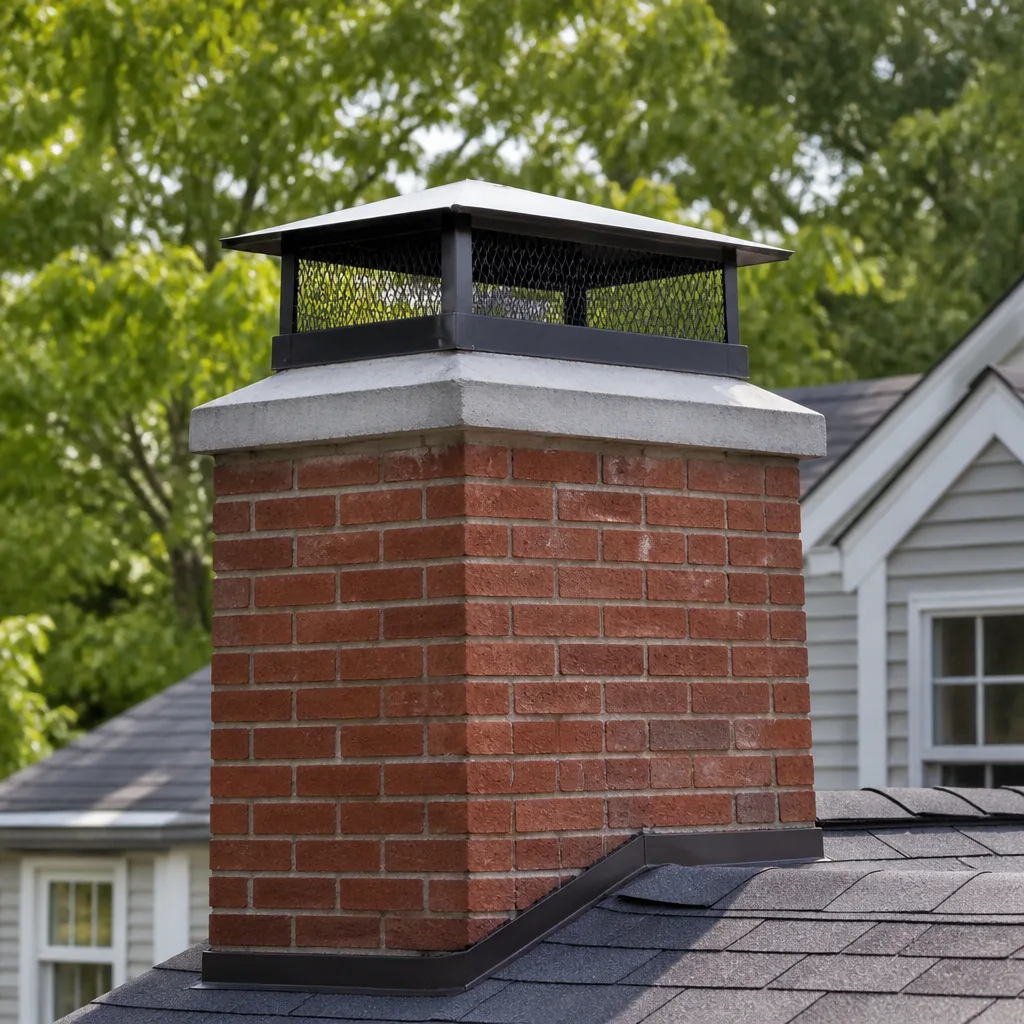
For a Tucson homeowner, the practical takeaway is that a chimney cap is cheap insurance and the absence of one is the reason wildlife gets in at all. If you’ve found evidence, the first step is a professional inspection that clears the flue and checks for damage the animal may have caused, plus a cap to prevent a repeat. We see this often enough that it’s a standard part of the inspection.
Cracks That Look Alarming vs. Cracks That Matter
Tucson’s extreme heat means chimneys here go through a lot of thermal cycling. A chimney exterior can be hot on one side in the afternoon and cool off dramatically after dark, and over many cycles the masonry and the mortar joints can develop hairline cracks. Some of these look dramatic and are essentially cosmetic. Others are structurally important. The difference is where the crack is and whether it goes through something load-bearing or protective.
Cracks that are usually superficial:
- Fine hairline cracks in the exterior stucco or paint layer, not the brick or mortar beneath.
- Shallow crazing in the mortar surface where the joint is still tight and solid.
- Small cracks that haven’t changed size or width over a couple of seasons.
Cracks that need a professional look:
- Cracks that run through a brick, not just the surface, or that widen over time.
- Stepped cracks that follow the mortar joints in a zigzag pattern, which can indicate settlement or movement.
- Cracks in the crown at the top, which let water in and accelerate the damage below.
- Any crack visible on the inside of the firebox or flue that could compromise the liner, since the liner is what keeps combustion gases out of the house.
The general rule: cracks in a protective or load-bearing layer matter more than cracks in a finish layer. And any crack that is growing, or that comes with water staining or a musty smell, deserves a look. This is exactly where a camera inspection earns its keep. It lets us see the flue interior and settle whether a crack is cosmetic or a real liner problem, without guesswork. If the flue liner is failing, resurfacing with HeatShield or relining with a DuraFlex system can sometimes solve the problem without a full rebuild, which is a better outcome than tearing down a sound chimney.
Smoke Backup, Draft Problems, and What They Signal
Smoke coming back into the room instead of going up the flue is one of the clearest warning signs a chimney can give you. It means the draft is failing, and the possible causes range from a simple blockage to a design or pressure issue.
- Check the obvious first. A closed or partially closed damper is the most common cause of a smoky fire. Make sure it’s fully open before you light.
- Rule out a blockage. A bird’s nest, a fallen cap, or heavy creosote buildup can choke off the flow. If the smoke starts immediately and consistently, a blockage is a likely candidate.
- Consider the fire itself. A cold flue, wet wood, or a fire built too large for the firebox can all cause smoke to spill. If the smoke clears once the fire is burning well, the chimney may be fine.
- If smoke backs up every time, stop using the fireplace and get it inspected. Persistent smoke backup can mean a flue that’s too small for the appliance, a damaged liner, or a pressure problem in the house, and none of those are things to troubleshoot by trial and error.
In Tucson, pressure problems can show up in newer, tightly built homes where exhaust fans in the kitchen or bathroom pull air out of the house faster than the chimney can draw it in. That can make a fire smoke even when the flue is clean. The fix might be as simple as cracking a window, or it might mean the chimney needs a closer look at the liner and the cap. Smoke backup is not a sign to ignore, because a fireplace that isn’t drafting is a fireplace that’s sending combustion gases somewhere other than up and out.
Persistent smoke backup is one of the clearest reasons to call a professional rather than wait. It’s the kind of symptom where a quick inspection answers the question definitively. If you’re in Tucson and dealing with a smoky fireplace, we can take a look and give you a straight answer on what’s causing it.
Common Mistakes to Avoid
- Treating every dark stain as a disaster. Soot on the firebox and efflorescence on the brick are different problems with different timelines. Read the texture before deciding urgency.
- Assuming a clean-looking firebox means a clean flue. Most deposit builds in the flue liner, out of sight. A camera inspection is the only way to know for sure.
- Burning wet or unseasoned wood to save money. It produces more creosote, and in Tucson’s dry climate, well-seasoned wood is available if you ask for it. The fuel you burn determines the deposit you’ll be sweeping.
- Skipping the cap. An uncapped flue is an open door for wildlife and rain. A missing cap is one of the most common findings we come across.
- Masking smells with air fresheners. An acrid smell that gets covered up is still an acrid smell. Find the cause first.
- Waiting until the first cold night to book a sweep. Chimney sweeps fill up when the season turns. Schedule before you need it, so you’re not choosing between a smoky fire and a wait.
- Accepting thousands of dollars of liner work without seeing the evidence. Ask to see the camera footage. Any professional should be willing to show you what they found.
See the difference
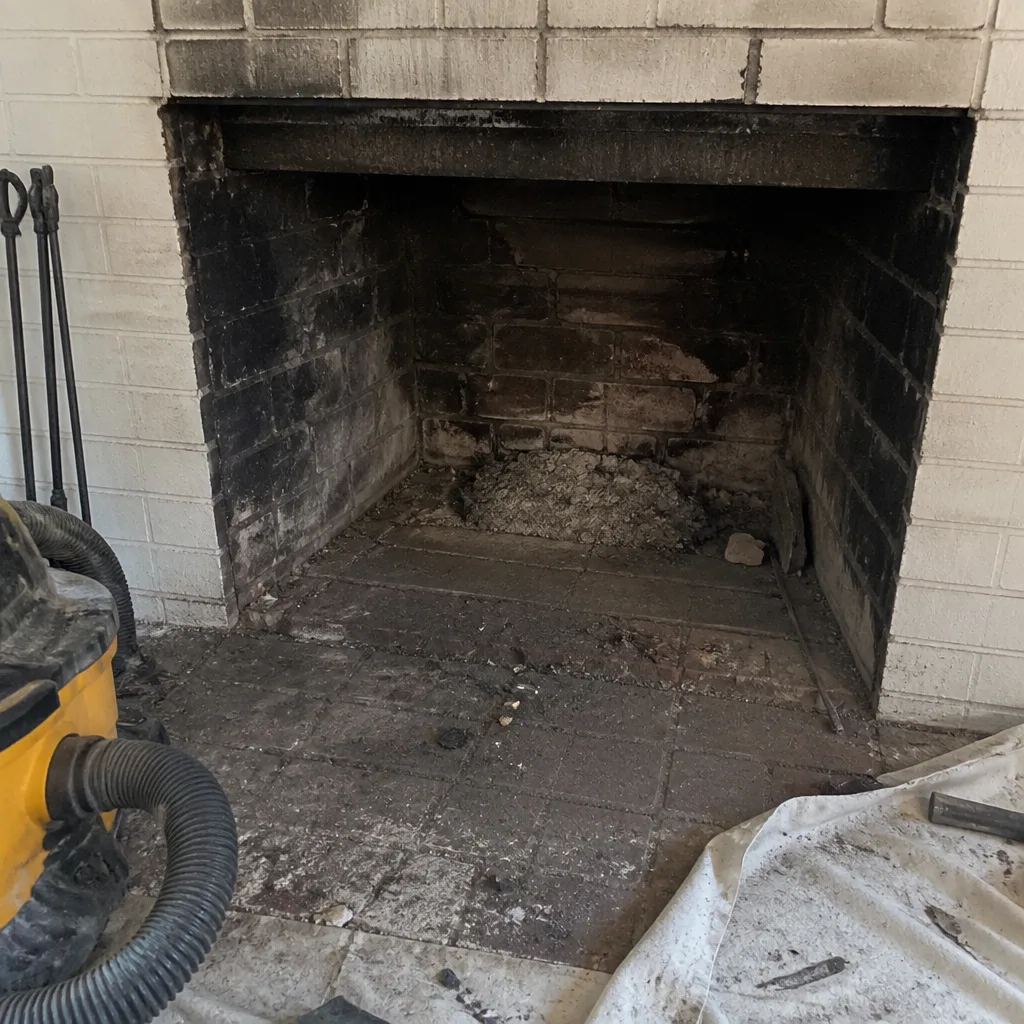 Before
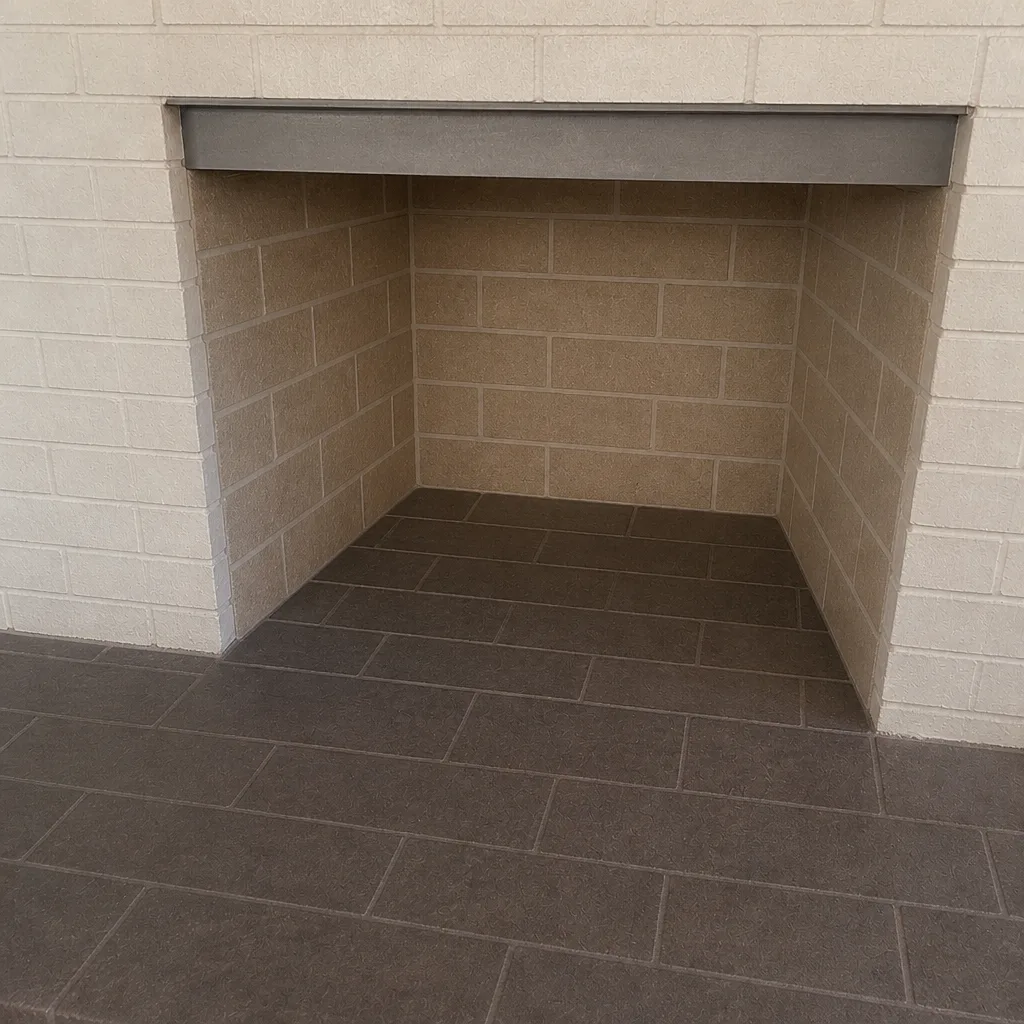 After
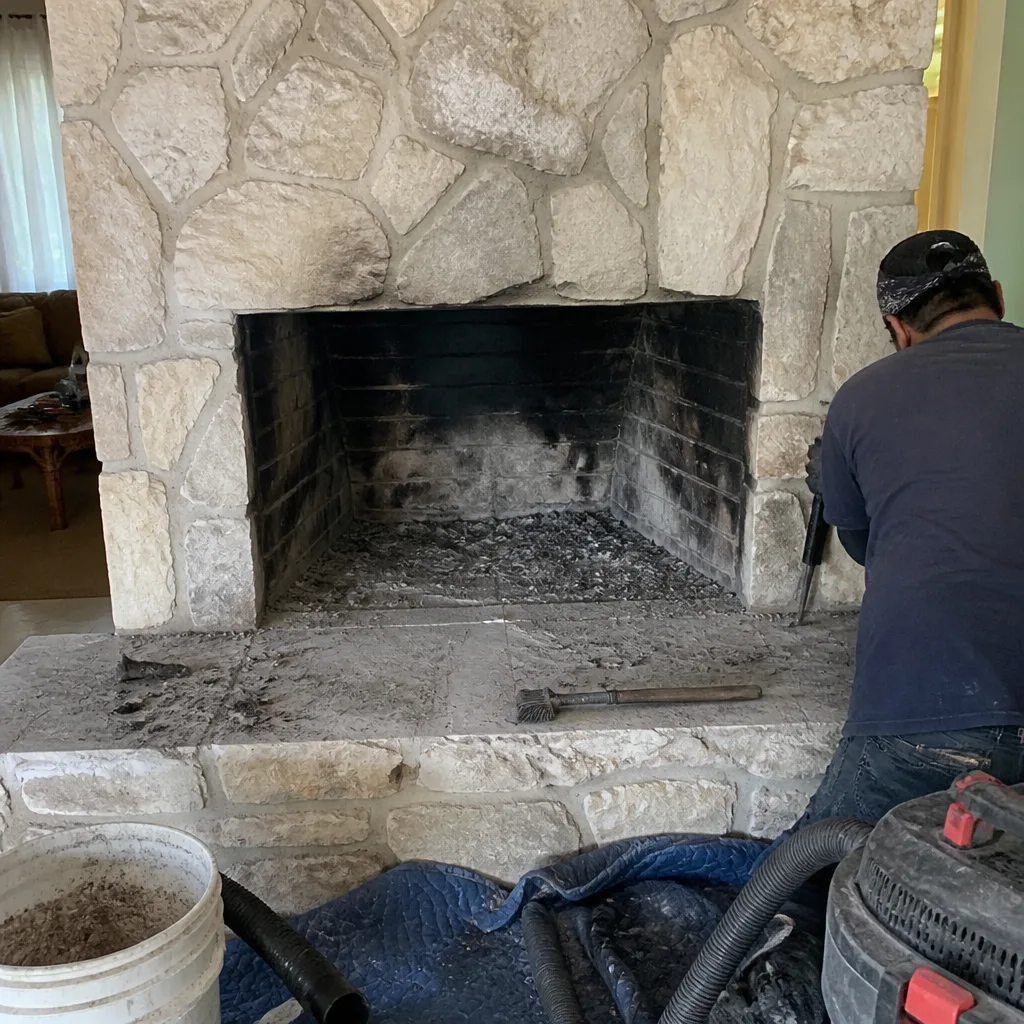 Before
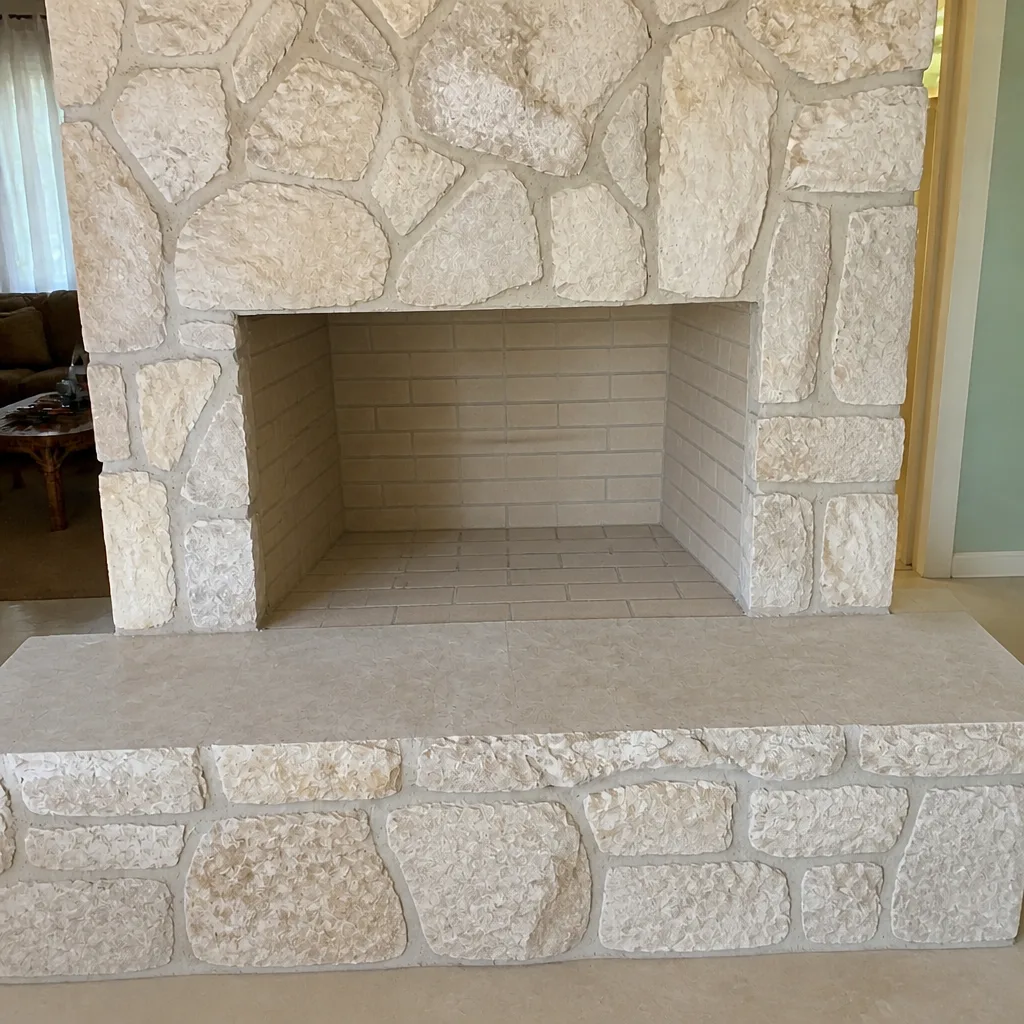 After
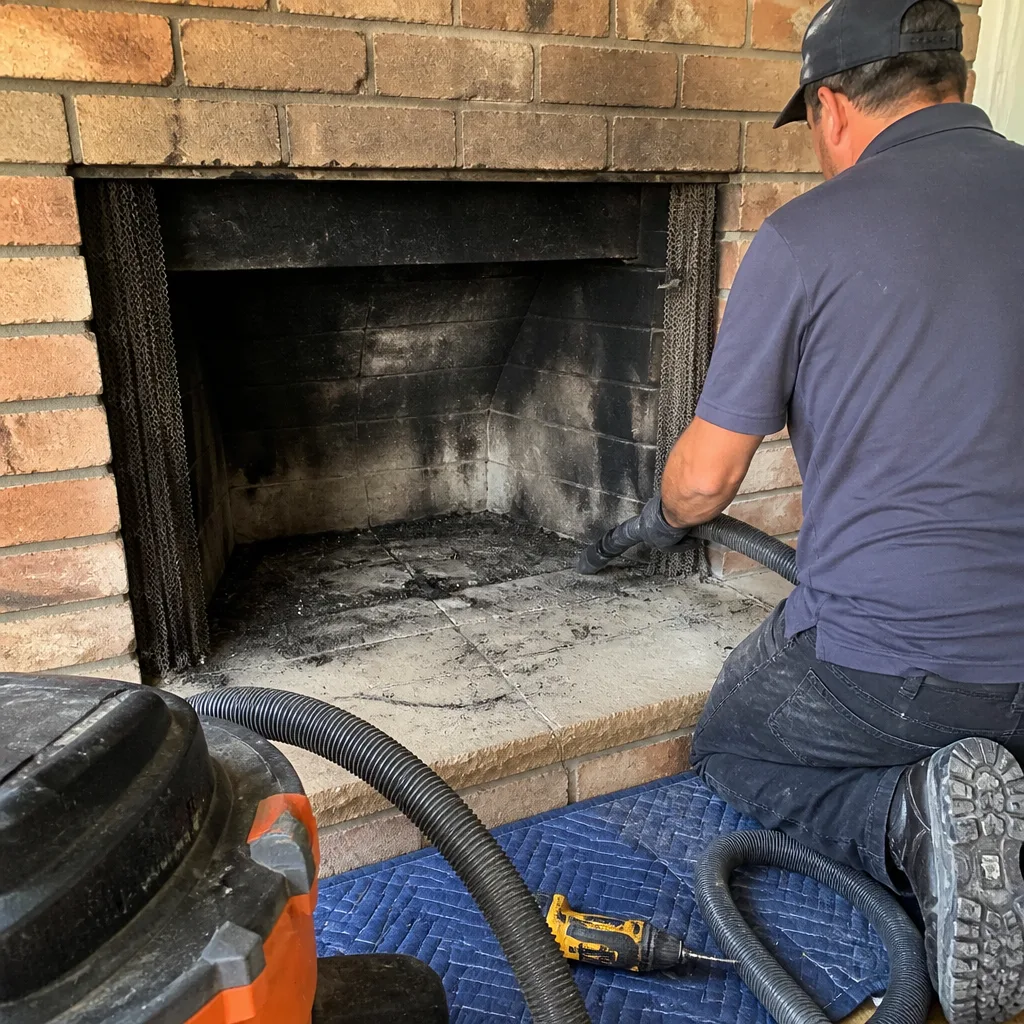 Before
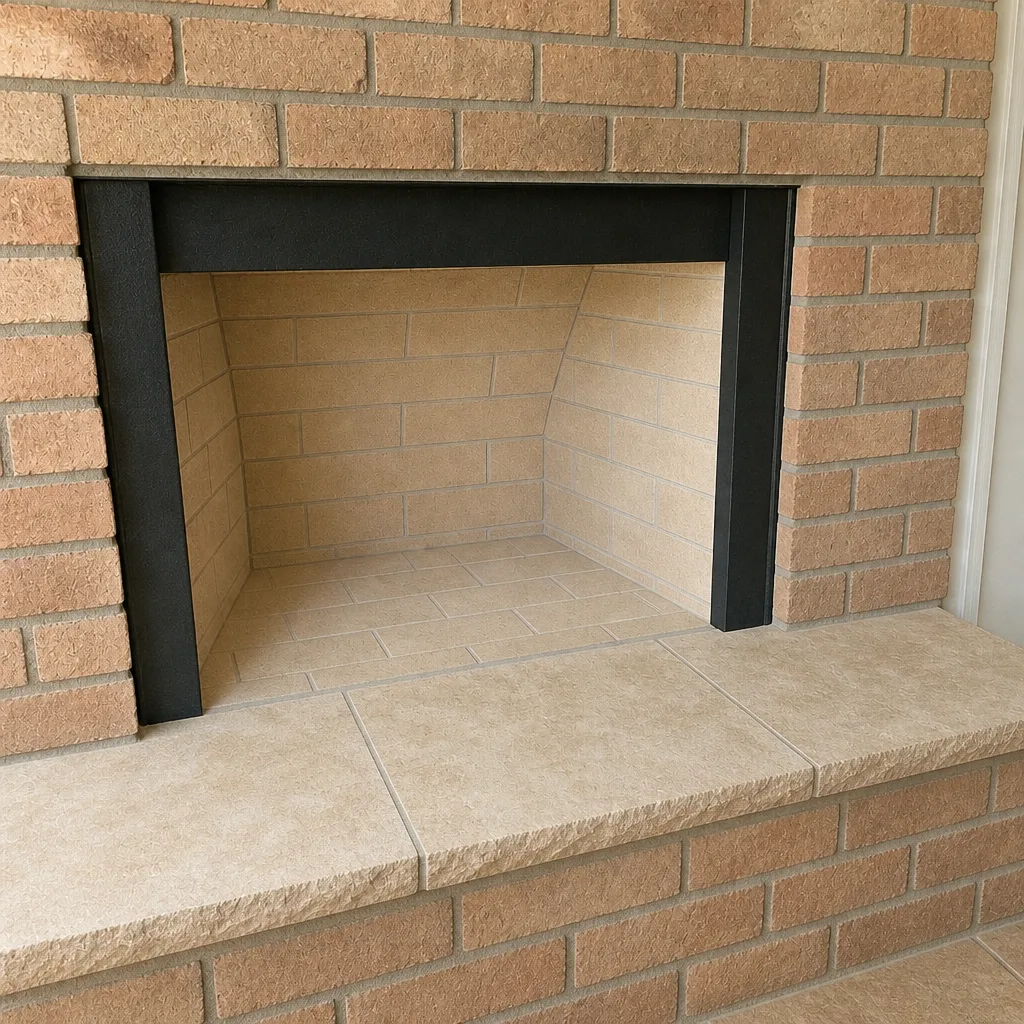 After
When to Call a Professional
Call a professional when you see glazed creosote, when smoke backs up into the room, when you find wildlife evidence or a nest, when water staining or spalling appears on the exterior brick, or when a crack looks structural. Call sooner if you smell sulfur or a sharp chemical odor with no fire lit, if the damper won’t open or close properly, or if it’s been more than a year since the last cleaning and you’ve burned through a season. Any one of these is a good enough reason to get an inspection, and the inspection answers the question rather than leaving you to guess.
Tucson Chimney Sweep offers free estimates in Tucson. Call (855) 750-1719. We answer 24/7. Fast dispatch from 7am to 7pm, Sunday through Friday. If a call comes in outside dispatch hours, we’ll book it into the next opening. A camera inspection and photo report come with the visit, so you can see exactly what we’re looking at before any work is recommended.
Frequently Asked Questions
Once a year for most homes, and more often if you burn frequently or burn wood that isn’t well seasoned. The annual inspection is the baseline; the sweep is only needed when the inspection shows enough deposit to warrant it. In Tucson’s short heating season, that often means an annual check before the first cool nights.
White, powdery staining is typically efflorescence, and it means water is moving through the masonry and evaporating at the surface. It’s the earliest visible sign of a water problem, and it’s usually traced to a crack in the crown or a gap in the flashing. It’s not an emergency, but it’s a good time to get it looked at before the damage progresses.
You can, but it’s harder than it looks, and it’s easy to miss what’s actually in the flue. A brush on a rod may not remove Stage 2 or Stage 3 creosote, and it won’t tell you whether the liner is compromised. A professional sweep with a camera inspection answers those questions. If you’re seeing glazed creosote or smoke backup, don’t rely on DIY.
Dirty chimneys usually smell smoky, acrid, or like a campfire, especially on a hot day with no fire lit. A musty smell points to water intrusion, and a sulfur smell is a red flag that needs a professional look. The smell you describe helps a technician know what to check first.
It depends where the crack is. Hairline cracks in the stucco or paint layer are usually cosmetic. Cracks that run through a brick, widen over time, or open in the crown or the firebox are the ones that matter. A growing crack or one with water staining should be inspected.
Creosote keeps building, and the risk of a chimney fire rises with it. The flue can become blocked by deposit or a nest, and smoke can back up into the house. Skipping cleaning doesn’t cause a problem on a schedule, but it removes the inspection that would catch a problem early, when it’s easier and less expensive to fix. Call (855) 750-1719 for an exact quote. Estimates are free.
The Bottom Line
The point of learning the warning signs is to make better decisions about urgency, not to become your own chimney inspector. White stains, dark deposits, odors, wildlife evidence, and cracks all mean something specific, and reading each one correctly is what separates a cosmetic issue from a call you should make today. When a sign points to glazed creosote, smoke backup, or a structural crack, get it inspected. When it points to efflorescence or a light soot coating, you have time, but you still want to know. Either way, a camera inspection gives you the evidence to decide. That’s the approach we take on every visit. We handle the repair, not just the report, from sweeping and relining to HeatShield resurfacing and dryer vent cleaning, so you’re not handed off to a second contractor mid-project. We work with a focused roster of professional-grade brands including Gelco, Olympia Chimney, Famco, and Copperfield, the same supply lines chimney professionals rely on.
If something on this list sounds like your chimney, call us for a free estimate. We serve homeowners across Tucson, and a straight answer on what you’re seeing is the first thing we give you. Call (855) 750-1719. We answer 24/7. Fast dispatch from 7am to 7pm, Sunday through Friday.
Written by the team at Tucson Chimney Sweep, serving Tucson since 2018.